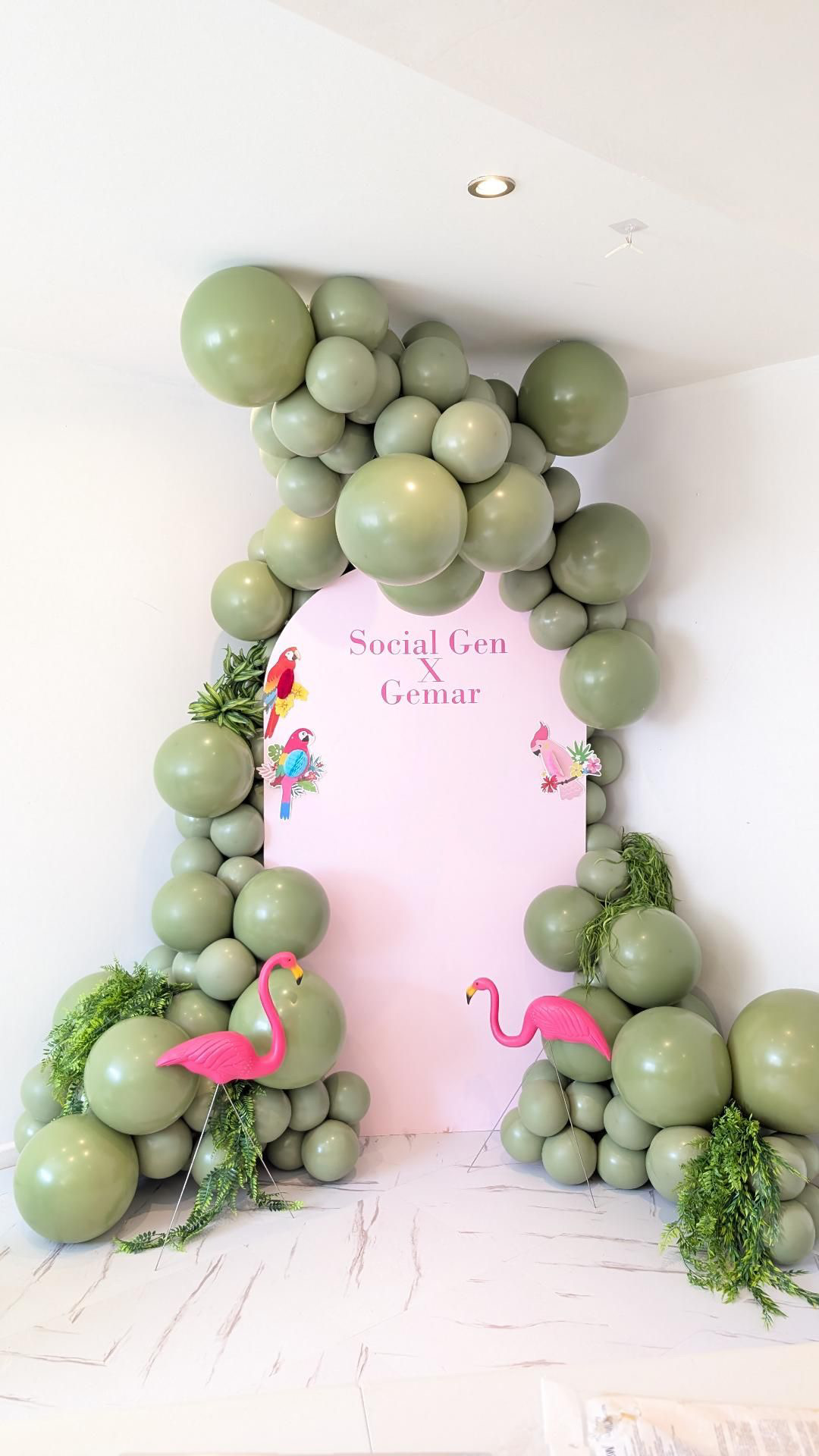
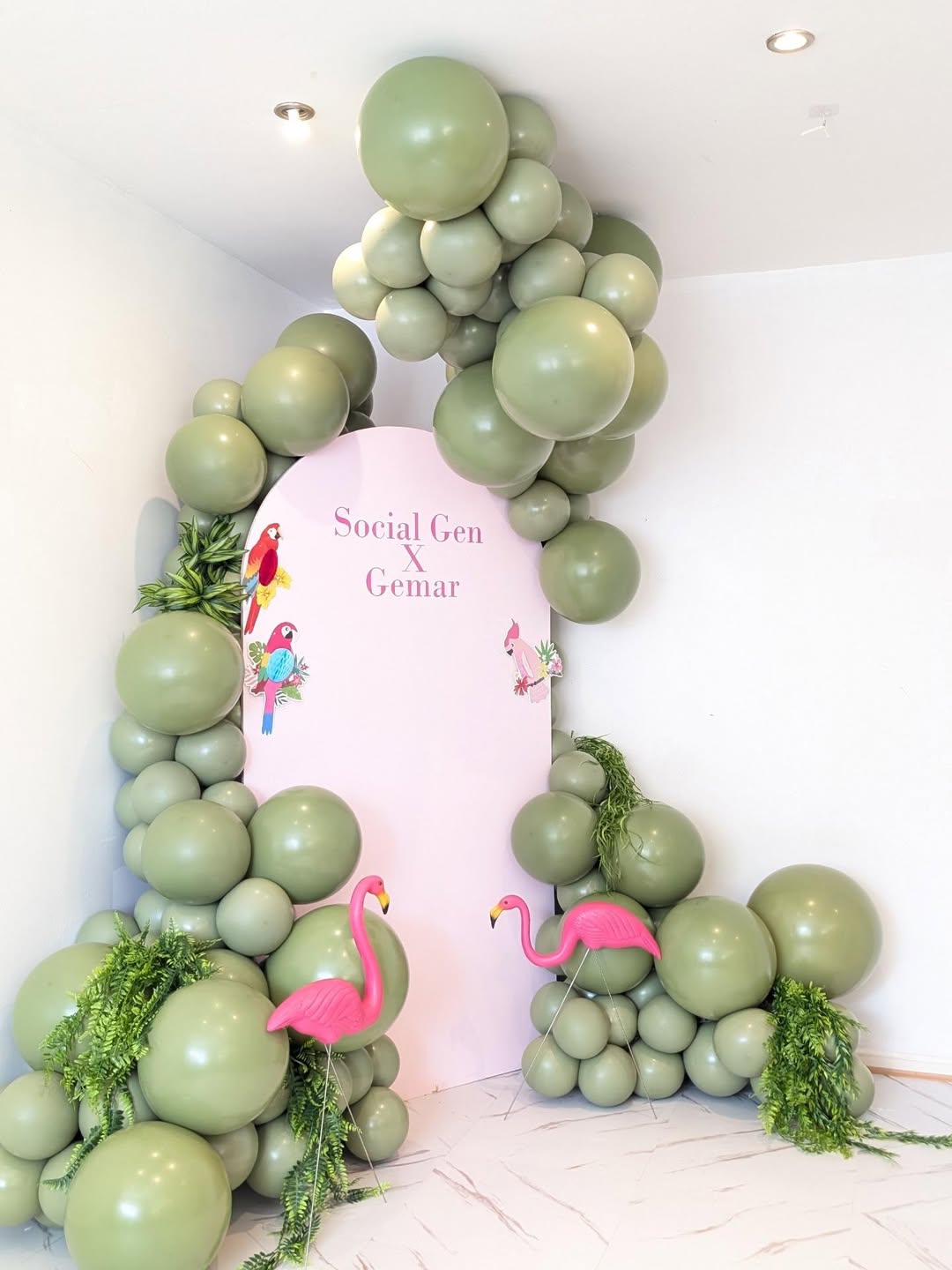
Business Lessons from Romina in G-Live Series Season 3
Creating beautiful balloon decor requires imagination and technical skill. Building a profitable balloon business also requires knowing how to price that creativity correctly.
At Gemar, we believe supporting balloon professionals goes beyond providing an extensive selection of colours, sizes, shapes, and finishes. It also means creating opportunities to learn from experienced professionals and gain the knowledge needed to grow creatively and commercially.
In the first episode of G-Live Series Season 3, balloon professional and business owner Romina shares the five pricing factors she uses to calculate balloon installations and build a more sustainable creative business.
She also demonstrates a practical technique for tying balloon clusters using the balloon necks, showing how clean construction and business efficiency can work together. The central lesson is clear: your price should not only cover the decoration—it should support the business behind it.
Prefer to read this article in Spanish? → [Explore the Spanish version here.]
From Creative Professional to Business Owner
Many balloon decorators begin by calculating the cost of the balloons and adding a small amount for their work. However, the actual cost of an installation includes much more than the materials visible at the event.
Professional balloon decor may require:
- Client consultations and design planning.
- Balloons and construction supplies.
- Backdrops, stands, frames, or other props.
- Preparation and installation time.
- Transportation and removal.
- Storage, software, insurance, and other operating expenses.
Thinking like a business owner means understanding the complete cost of delivering the client experience—not simply the cost of filling balloons.
Instead of asking:
“How much did I spend on balloons?”
Begin asking:
“What does my business need to charge to deliver this design professionally and profitably?”
Romina’s five-factor method provides a practical framework for answering that question.
1. Calculate Your Materials
The first factor includes every material consumed while creating and installing the decoration.
Depending on the project, materials may include:
- Balloons in every size, colour, and finish.
- Adhesives, hooks, tape, line, and fasteners.
- Flowers, ribbons, vinyl, or personalized details.
- Disposable construction supplies.
- Replacement balloons and an allowance for waste.
Do not calculate only the balloons guests will see. Include the supplies required to prepare, build, transport, install, and finish the design.
Accurate material calculations help prevent small, unrecorded expenses from reducing the earnings of each project.
Material Quality Is a Business Decision
The balloons you select affect more than the appearance of an installation. They can also influence preparation time, consistency, waste, and your confidence when delivering the finished design.
Reliable balloons can make it easier to:
- Maintain consistent sizing and shape.
- Create clean clusters and structures.
- Estimate the quantities required for a project.
- Reduce unnecessary replacements.
- Deliver a polished and professional result.
Premium pricing is not created by materials alone, but professional materials help support the quality, consistency, and client experience behind a premium service.
Gemar offers balloon decorators an extensive selection of colours, sizes, shapes, and finishes designed to support both creative possibilities and professional execution.
2. Include Prop Rental
Backdrops, arches, walls, frames, pedestals, stands, and other props can represent a significant business investment.
Even when you already own a backdrop, its use should not automatically be included for free. The business originally paid to purchase or produce it and must continue paying for its storage, transportation, maintenance, cleaning, and eventual replacement.
Romina recommends including prop rental as a separate pricing component.
When establishing a rental price, consider:
- The original cost of the prop.
- How frequently it can be used.
- Storage and transportation.
- Setup and removal.
- Cleaning and maintenance.
- Potential damage or replacement.
A reusable prop does not disappear after the event, but every use still carries a cost and should contribute toward recovering the original investment.
3. Charge for Your Time
A balloon installation does not begin when you arrive at the venue.
The total time invested in a project can include:
- Communicating with the client.
- Creating the concept and proposal.
- Selecting and ordering materials.
- Inflating and preparing the balloons.
- Building and transporting the design.
- Installing and making final adjustments.
- Returning to remove the decor or collect rented props.
Estimate how many hours the complete project will require and apply an hourly rate that reflects your experience, skills, market, and business goals.
If assistants or installers are needed, include their labor as well.
Your time is not an optional addition to the price. Your expertise, preparation, and execution are part of the professional experience the client is purchasing.
4. Distribute Your Business Overhead
Every business has expenses that cannot be assigned to one particular balloon or installation. These are known as business overhead.
Overhead may include:
- Warehouse, studio, or office rent.
- Insurance and licenses.
- Website and e-commerce services.
- Booking, design, accounting, or invoicing software.
- Marketing, phone, and internet expenses.
- Equipment maintenance and administrative costs.
These expenses continue even when you are not working at an event.
Romina explains that decorators can distribute their monthly overhead across the number of events they expect to complete.
For example, if your monthly overhead is $1,000 and you normally complete 10 events per month, each event should contribute $100 toward those expenses.
The basic calculation is:
Monthly overhead ÷ Expected monthly events = Overhead fee per event
This amount should be reviewed regularly as your expenses, event volume, or business structure changes.
5. Add a Percentage on Top
After calculating materials, prop rental, labor, and overhead, Romina adds an additional percentage.
This percentage gives the business room to generate earnings beyond recovering its expenses. That money can help the company manage unexpected costs, replace equipment, improve its services, and continue growing.
Imagine that the first four pricing components total $300:
| Pricing component | Example |
|---|---|
| Materials | Included |
| Prop rental | Included |
| Time and labor | Included |
| Business overhead | Included |
| Project subtotal | $300 |
| 30% added on top | $90 |
| Final client price | $390 |
The calculation is:
$300 × 30% = $90
$300 + $90 = $390
Romina uses 30% as an example. The appropriate percentage for your business may vary based on your market, expenses, experience, demand, and growth goals.
It is also important to understand that adding 30% to your project cost represents a 30% markup, not a 30% profit margin. If your goal is to achieve a specific profit margin, the calculation will be different.
Romina’s Balloon Decor Pricing Formula
The complete method can be summarized as:
Materials + Prop Rental + Time and Labor + Business Overhead = Project Cost
Then:
Project Cost + Additional Percentage = Final Client Price
Each factor plays a different role:
| Factor | What it covers |
|---|---|
| Materials | Balloons and supplies consumed by the project |
| Prop rental | Backdrops, frames, stands and reusable equipment |
| Time and labor | Planning, preparation, travel, installation and removal |
| Business overhead | The ongoing expenses required to operate the company |
| Additional percentage | Earnings that support continuity and growth |
This formula gives decorators a clearer starting point for creating quotes based on their real business costs.
The Client Is Purchasing More Than Balloons
Two decorations may use a similar number of balloons but require completely different prices.
One event may involve a simple indoor setup with easy access. Another might require a custom design, a large backdrop, several hours of travel, additional installers, outdoor conditions, or late-night removal.
The quantity of balloons may be similar, but the complete client experience is not.
A professional client is paying for:
- Your creative concept.
- Your technical knowledge.
- Your preparation and organization.
- Your time and labor.
- Your professional equipment.
- Your ability to manage the installation.
- The convenience of receiving a finished result.
Understanding this distinction helps decorators communicate their value with greater confidence.
Clean Technique Supports Premium Value
A professional price should be supported by professional execution.
During the episode, Romina demonstrates one of her favorite techniques for tying balloon clusters together using the balloons’ own necks.
This technique can help decorators:
- Create clean balloon clusters.
- Reduce visible construction materials.
- Build sections efficiently.
- Produce a more polished finish.
- Maintain consistency throughout the installation.
Small technical details can influence how clients perceive the finished work. Clean construction, consistent balloons, intentional colour selection, and careful finishing all contribute to a more professional experience.
Gemar Helps You Create and Grow
Supporting balloon professionals means offering more than products. It means providing inspiration, education, and opportunities to learn from experienced members of the industry.
Through G-Live Series, Gemar helps decorators develop three important areas:
- Education: Practical creative and business knowledge.
- Creation: An extensive selection of balloon colours, sizes, shapes, and finishes.
- Professional growth: Resources that help decorators improve their work and strengthen their businesses.
When your prices cover materials, equipment, labor, operating expenses, and additional earnings, you can make decisions with greater confidence.
You can invest in better tools, maintain your inventory, strengthen your team, improve the client experience, and take on projects that support your long-term goals.
Watch Premium Pricing Secrets with Romina
Watch the first episode of G-Live Series Season 3 to hear Romina explain her five pricing factors and demonstrate her technique for tying balloon clusters using balloon necks.
Watch the Full G-Live Episode on YouTube
You can also watch the Five Pricing Factors Highlight for a quick recap of the formula.
Begin with your real costs, value your time, account for the business behind the scenes, and establish prices that allow your creativity—and your company—to keep growing.
Explore Gemar Balloons | Find a Local Distributor | Become a Gemar Distributor
 by Cloud Media Pro